4x 9 3.5 X 9

gasmanvison
Sep 18, 2025 · 5 min read
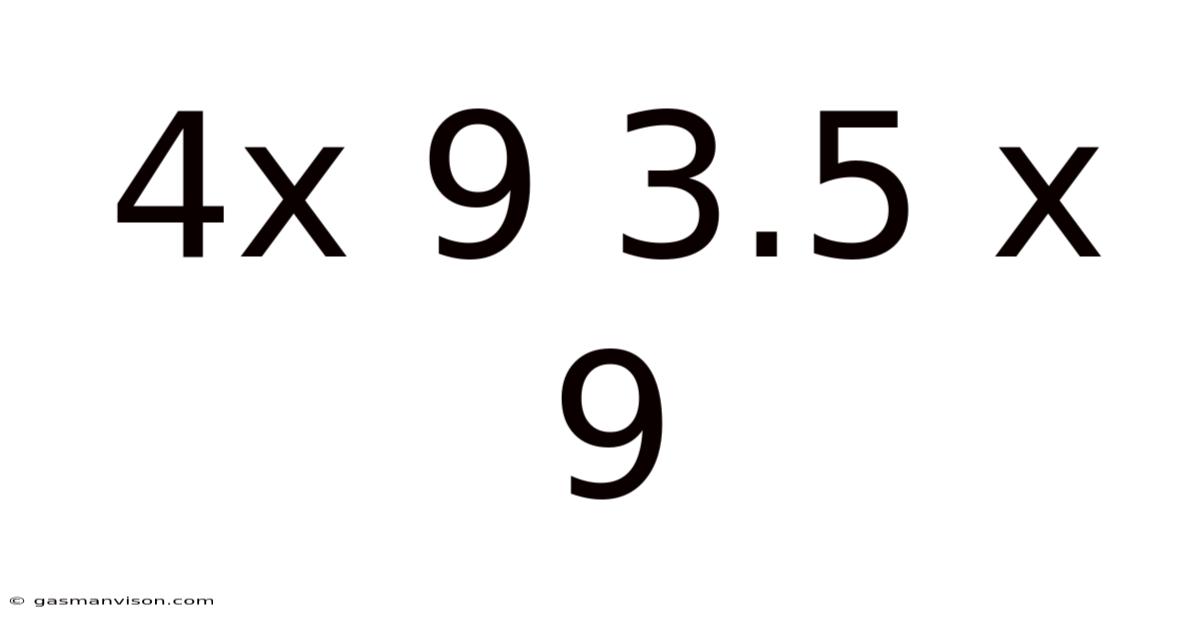
Table of Contents
Decoding the Mystery: Understanding 4x9, 3.5x9, and Their Applications
This article delves into the meaning and applications of the seemingly cryptic notation "4x9, 3.5x9." While it might initially appear ambiguous, this notation commonly refers to dimensions, specifically in the context of lumber, construction materials, or even potentially industrial components. We'll explore the probable interpretations, discuss their implications in various fields, and provide a comprehensive overview to help you understand this common yet often misunderstood notation.
Understanding the Notation: Dimensions and Units
The notation "4x9" and "3.5x9" represents dimensions expressed in inches, unless otherwise specified. The first number denotes the width, and the second number denotes the length. Therefore:
- 4x9: Indicates a material that is 4 inches wide and 9 inches long.
- 3.5x9: Indicates a material that is 3.5 inches wide and 9 inches long.
It's crucial to understand that these dimensions often refer to nominal sizes rather than precise, finished measurements. Actual dimensions may vary slightly due to manufacturing tolerances and processes. Always check the specifications provided by the manufacturer for the exact dimensions.
Possible Applications and Industries:
These dimensions, particularly in the context of inches, suggest various potential applications across several industries:
1. Lumber and Woodworking:
The most common interpretation of "4x9" and "3.5x9" is related to lumber dimensions. While these exact sizes might not be standard lumber sizes, they could represent:
- Cut Pieces: These dimensions could refer to pieces of lumber that have been cut to specific sizes for a particular project. Carpenters and woodworkers often cut lumber to non-standard sizes to fit their design requirements.
- Custom Moulding: Custom-made mouldings, trims, or decorative wood pieces might be produced with these dimensions.
- Specialty Wood Products: Certain niche wood products, like crafting materials or specific components for furniture, might utilize these dimensions.
Understanding the lumber grading system (e.g., understanding the difference between select structural lumber and common lumber) is also important when working with wood of these dimensions. This ensures the right structural integrity for your project.
2. Metal Fabrication and Industrial Components:
In metal fabrication or other industrial settings, "4x9" and "3.5x9" could represent:
- Metal Sheets or Plates: Metal sheets or plates of these dimensions could be used in various applications, depending on the metal type and thickness.
- Custom-Machined Parts: These dimensions could be the specifications for custom-machined parts used in machinery or equipment.
- Templates or Jigs: These dimensions could be used as templates or jigs in manufacturing or construction processes.
The tolerance levels in metal fabrication are usually stricter than in woodworking, requiring more precise measurements and adherence to specifications.
3. Construction and Building Materials:
While less common as standard sizes for large construction materials, "4x9" and "3.5x9" might appear in:
- Tiles or Blocks: Certain types of smaller tiles or blocks might use these dimensions.
- Specialized Construction Components: These dimensions could be used for smaller, specialized components within a larger construction project.
- Interior Design Elements: These dimensions could be relevant for custom interior design elements like shelving or decorative panels.
It is vital to always confirm the exact material specifications with the supplier to ensure they meet the required building codes and safety regulations.
4. Other Potential Interpretations:
Beyond the above, these dimensions could also represent:
- Packaging Dimensions: These could refer to the dimensions of a package or container.
- Graphic Design Elements: In graphic design, these could represent the dimensions of a specific element within a larger design.
The Importance of Context and Additional Information:
The accurate interpretation of "4x9" and "3.5x9" heavily depends on the context in which it is used. Always look for additional information to clarify the units (inches, centimeters, millimeters, etc.) and the material type. This additional information will help determine the specific application and the implications of these dimensions.
For example, if you encounter these dimensions in a woodworking plan, you’ll need to understand the type of wood, the required grade, and the intended application of the piece. Similarly, in a metalworking context, understanding the type of metal (e.g., aluminum, steel, stainless steel), its gauge or thickness, and its intended use is crucial.
Practical Considerations and Calculations:
Understanding these dimensions allows for various calculations, essential for numerous applications:
- Area Calculation: The area of a rectangular piece with these dimensions is easily calculated by multiplying width and length: 4 inches x 9 inches = 36 square inches (for 4x9) and 3.5 inches x 9 inches = 31.5 square inches (for 3.5x9).
- Volume Calculation: If these dimensions represent the cross-section of a three-dimensional object, knowing the thickness allows for volume calculation.
- Scaling and Proportion: These dimensions can serve as a basis for scaling and proportioning in design and construction projects.
- Material Estimation: Understanding these dimensions helps accurately estimate the quantity of materials needed for a project.
Avoiding Confusion and Ensuring Accuracy:
To avoid any confusion, always:
- Verify the Units: Explicitly confirm whether the units are inches, centimeters, millimeters, or any other unit of measurement.
- Check for Additional Information: Look for additional specifications, such as material type, thickness, or tolerance levels.
- Consult Experts: If unsure, always consult with an expert in the relevant field (e.g., a carpenter, metalworker, or engineer).
Conclusion:
While the notation "4x9" and "3.5x9" might initially seem cryptic, understanding their context and implications allows for accurate interpretation and application. These dimensions likely represent width and length measurements, predominantly in inches, and find application across diverse fields like lumber, metal fabrication, construction, and even design. By considering the associated context and necessary supplementary information, one can effectively utilize these dimensions in practical applications while ensuring accuracy and preventing potential errors. Always prioritize verifying units and seeking expert advice when needed to avoid any misinterpretations. The accuracy of these measurements is fundamental to successful projects in various industries. Remember to always prioritize safety and adhere to all relevant regulations when working with materials of any size.
Latest Posts
Latest Posts
-
104 Degree Fahrenheit To Celsius
Sep 18, 2025
-
What Is 5 Of 1000000
Sep 18, 2025
-
How Many Neutrons Nitrogen Have
Sep 18, 2025
-
Georgia Douglas Johnson Hope Review
Sep 18, 2025
-
What Is 63 Of 150
Sep 18, 2025
Related Post
Thank you for visiting our website which covers about 4x 9 3.5 X 9 . We hope the information provided has been useful to you. Feel free to contact us if you have any questions or need further assistance. See you next time and don't miss to bookmark.